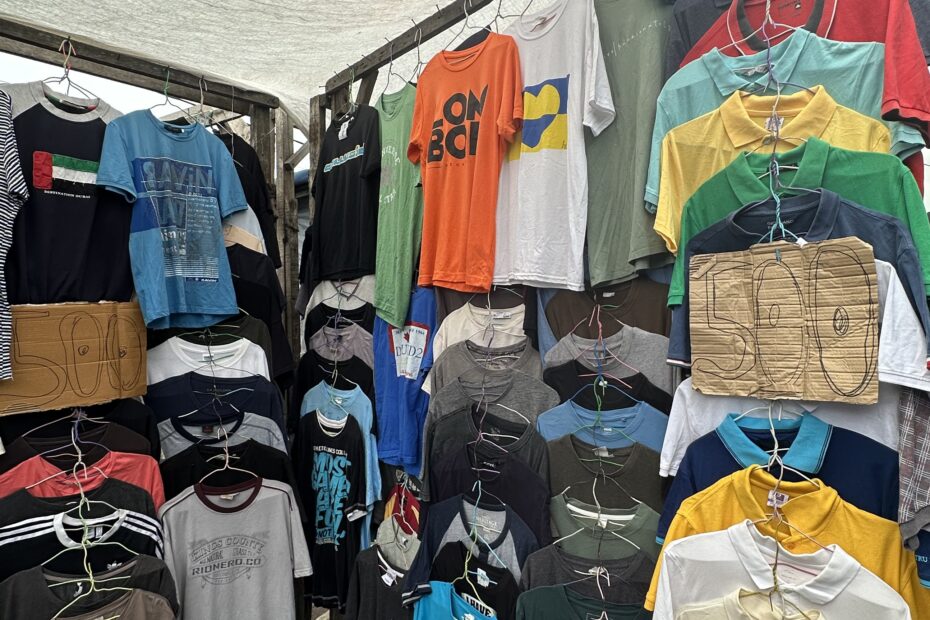
New research from the Republic of Congo reveals how the global secondhand clothing trade can generate substantial textile waste, while highlighting alternatives that could improve both environmental and social outcomes.
Secondhand clothing is often celebrated as a success story of the circular economy: garments are given a second life, resources are kept in use, and waste is reduced. But what happens when these clothes reach the countries that import them? New research published in Circular Economy and Sustainability challenges the assumption that the international secondhand clothing trade is inherently circular.
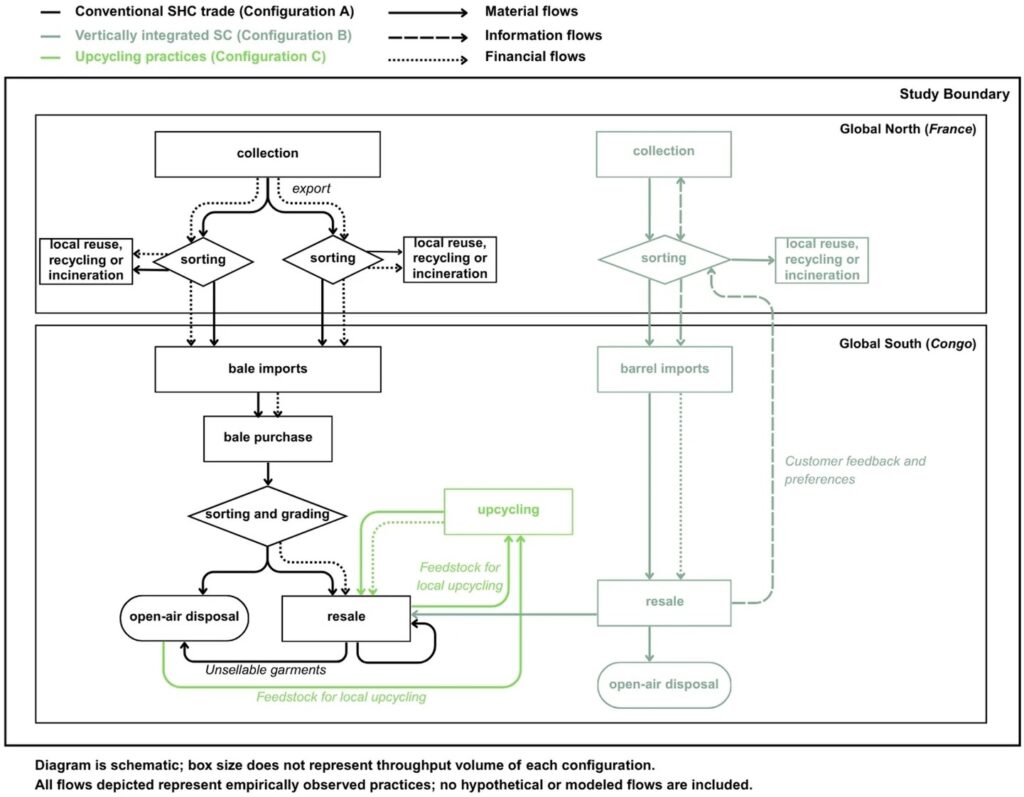
The study, led by PhD researcher Hester Vanacker, with contributions from an international team of co-authors including Kirsi Laitala from OsloMet, examines the secondhand clothing trade in Pointe-Noire, Republic of Congo. Based on fieldwork and interviews with 15 actors involved in importing, selling and upcycling used clothing, the researchers mapped how garments, information and money move through the supply chain.
Up to half of imported clothes may become waste
The findings reveal a complex picture. Secondhand clothing provides an important source of affordable garments and livelihoods for thousands of people. Yet the conventional trade also creates significant challenges.
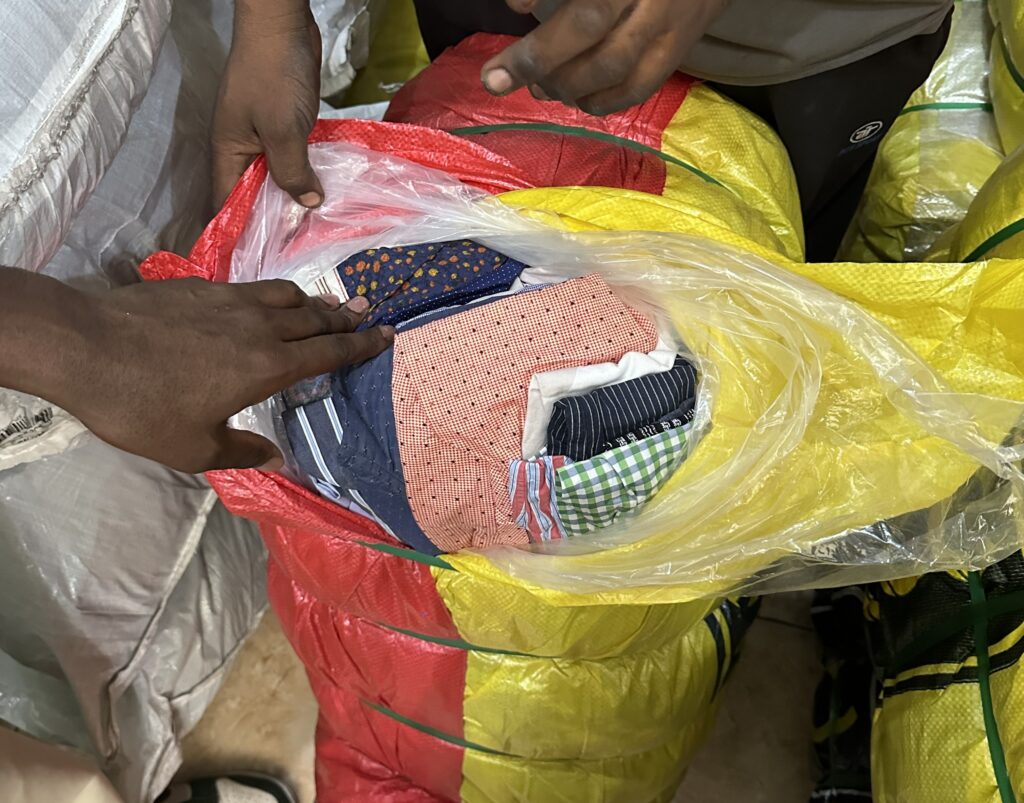
Local vendors often buy large bales of clothing without knowing exactly what they contain. Some garments are damaged, while others are unsuitable for the local climate, tastes or needs. The study found that some vendors struggle to sell even half of the clothes in a bale, and up to 50% of garments may be discarded immediately.
In the absence of formal waste management systems, unwanted textiles may end up in streets, gutters and informal dumping grounds, or be burned with other rubbish. Meanwhile, many people working in the trade face precarious employment and financial insecurity.
These findings highlight a central contradiction: extending the life of clothing does not automatically create a sustainable circular system. The environmental benefits of reuse depend on what happens to garments after export and if the production of new items is reduced, while the social outcomes depend on how value, costs and risks are distributed along the supply chain.
Learning from alternative approaches
The researchers identified three different ways of organizing the trade.
The first is the conventional model, which dominates the market but is characterized by limited information about garment quality and local demand, high levels of unsold clothing and insecure working conditions.
The second is a vertically integrated model operated by La Mode Européenne (LME). By coordinating activities from collection and sorting in France to sales in the Republic of Congo, the organization can select clothing according to local needs and preferences. Direct feedback from customers informs future sorting decisions. According to the study, around 90% of the garments exported through this model are sold, and employees benefit from more secure and better-paid work than many conventional market vendors.
The third approach is local upcycling, in which unwanted or damaged garments and textiles are transformed into new products. Although this practice demonstrates creative ways of retaining material value, local designers face barriers such as limited resources, inadequate infrastructure and difficulties finding customers willing to pay for their work.
Circular supply chains can slow, intensify, or close material loops
Based on these findings, the researchers propose combining the strengths of the vertically integrated model with local upcycling. In this hybrid approach, better sorting and direct customer feedback would help ensure that imported clothing meets local needs, while local designers could transform unsuitable garments into new products.
The study also argues that circularity should not be understood as a simple distinction between linear and circular systems. Instead, it is a continuum: different supply chains have different capacities to extend garment use, prevent waste and retain value locally.
Crucially, the results show that circularity depends not only on material flows, but also on information, coordination and local knowledge. Without these elements, exporting unwanted clothing can shift the environmental burden from wealthier countries to importing communities, while leaving local actors to bear the costs.
What does this mean for textile policy?
The findings are relevant to ongoing efforts to improve textile circularity and producer responsibility. As policies increasingly seek to reduce textile waste and promote reuse, it is important to consider the consequences beyond the countries where garments are originally collected and discarded.
Extended producer responsibility schemes could play a role in supporting better sorting, waste management and locally appropriate solutions in importing countries. However, effective measures need to account for local circumstances and ensure that the communities handling exported textiles have a voice in decisions that affect them.
Ultimately, the study shifts the question from whether secondhand clothing is circular to a more important one: under what conditions can the international secondhand clothing trade become environmentally sustainable, economically viable and socially just?
Vanacker, H., Brooks, A., Lemieux, A.-A., Laitala, K., & Lamouri, S. (2026). The Circular Economy in Action or a Linear System in Disguise? The International Secondhand Clothing Trade in the Republic of Congo. Circular Economy and Sustainability, 6, 444. doi:10.1007/s43615-026-01144-2