Skip to content

Understanding garment durability through local lenses: a participatory study with communities across the globe

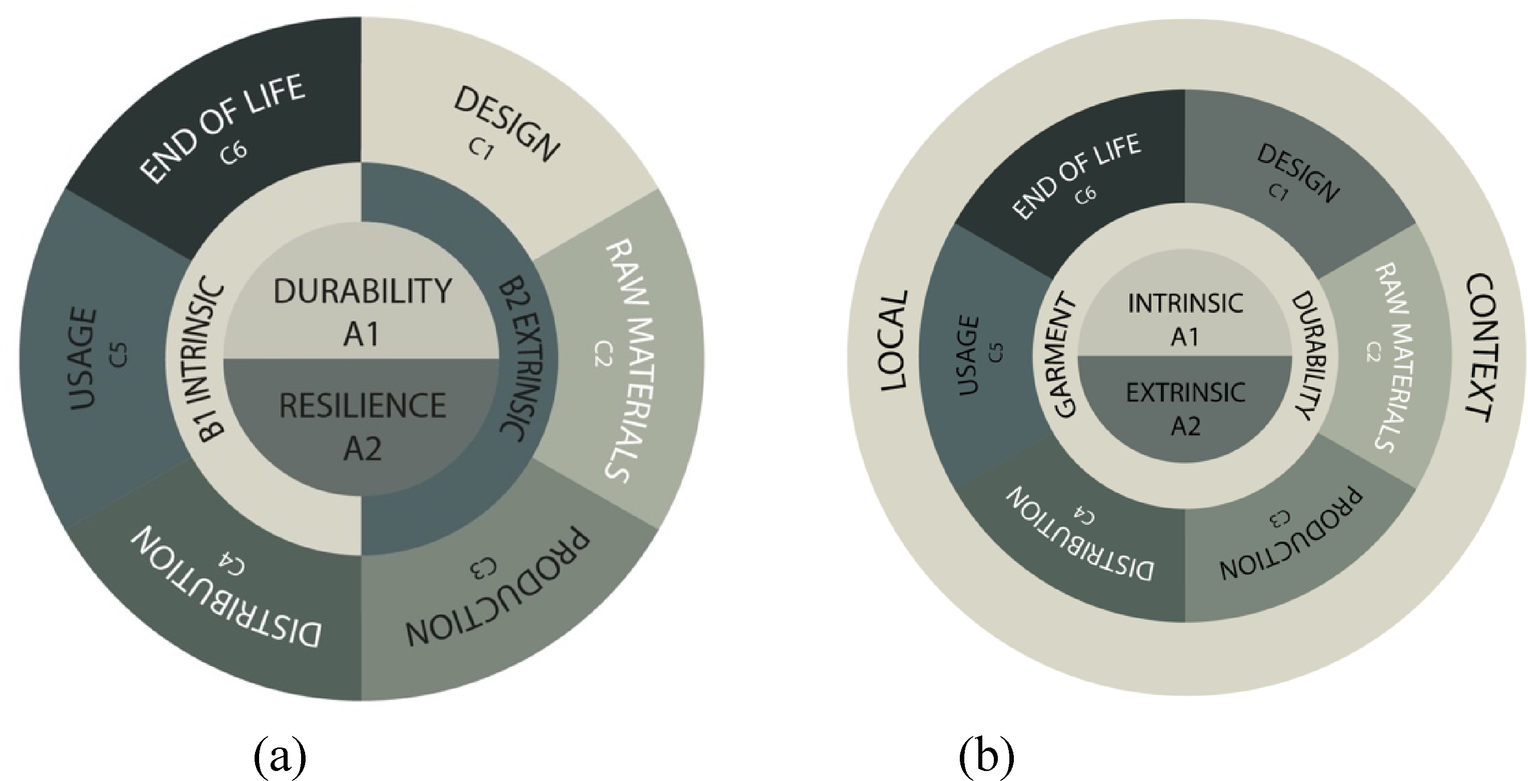
Authors: Hester Vanacker, Andrée-Anne Lemieux, Kirsi Laitala, Michelle Dindi, Sophie Bonnier & Samir Lamouri. Abstract The overproduction of garments, often of low quality, contributes significantly to environmental degradation, especially in the Global South. Therefore, assessing the durability of garments has attracted… Understanding garment durability through local lenses: a participatory study with communities across the globe
Sustainable clothing design: use matters

Many life cycle assessment studies document that the use period is the most resource-demanding phase during the clothing life cycle. In this paper, we discuss how design can help to reduce the environmental impacts of clothing. Motives behind clothing disposal, acquisition practices and maintenance habits are analysed based on two surveys, qualitative interviews of households, and examination of disposed clothing. The main reasons for clothing disposal were changes in garments, followed by size and fit issues, taste-related unsuitability, situational reasons, functional shortcomings and fashion or style changes. Several design solutions can enable the users to keep and use the clothes longer, and reduce the need for laundering, thus potentially decreasing the total environmental effects of clothing consumption.