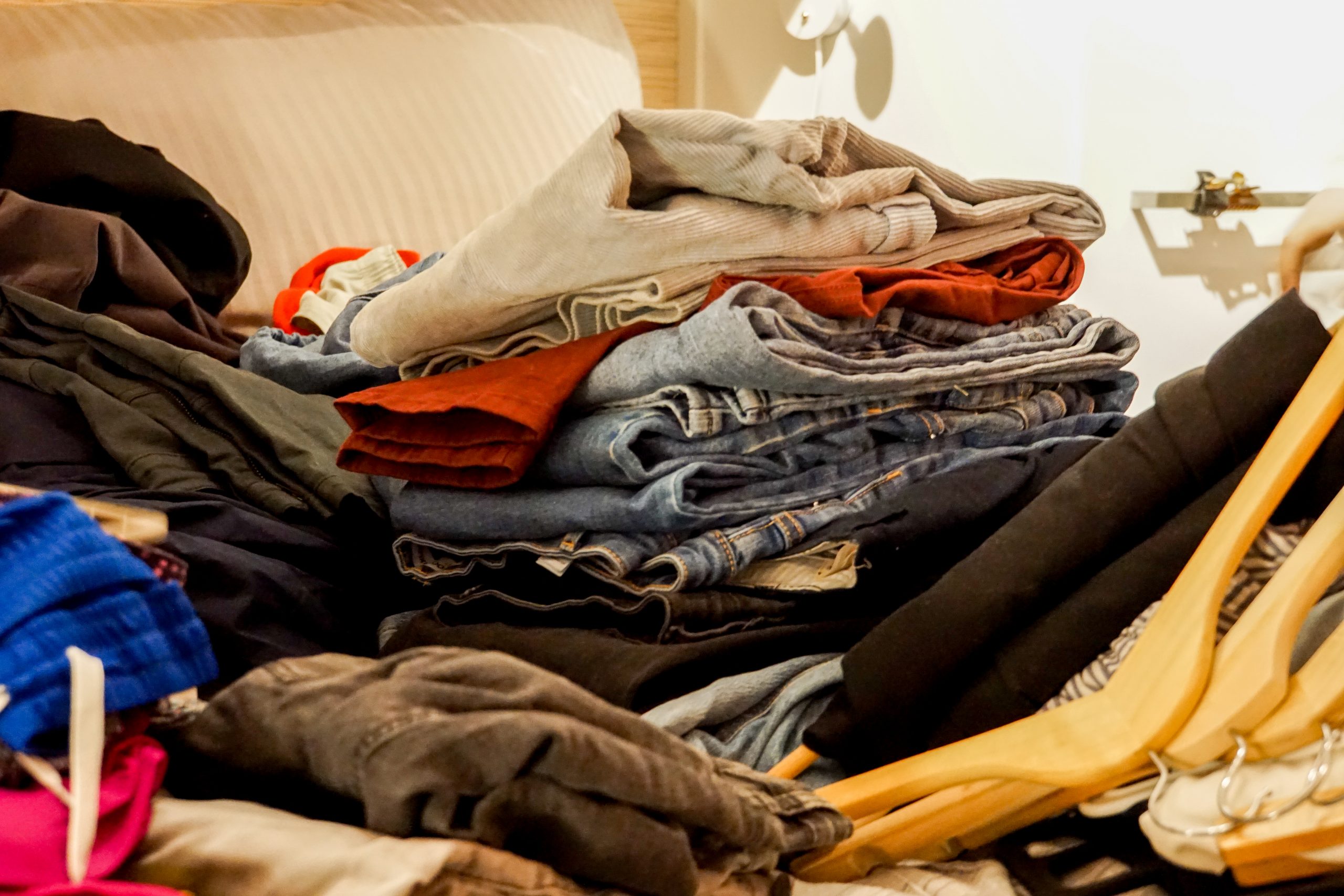
More than enough clothes: a social practice-oriented study of gender and clothing accumulation
Author: Vilde Haugrønning
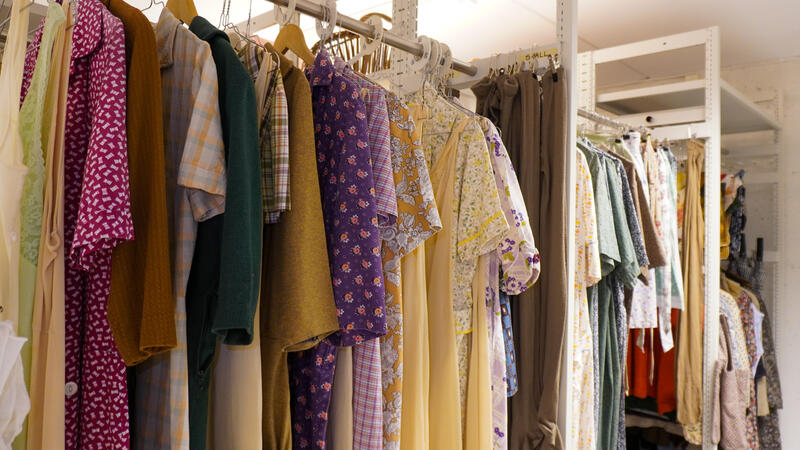
Authors: Vilde Haugrønning, Ingrid Haugsrud Abstract This chapter explores the influence of gender on clothing consumption and the impact on differences in clothing volumes between men and women. Based on a qualitative and quantitative wardrobe… Comparing Male and Female Wardrobes: Gender Dynamics in the Practice of Dressing
Authors: Ingrid Haugsrud, Ingun Grimstad Klepp and Kirsi Laitala Abstract The impact of the fashion industry on the environment is undoubtedly size-able. In response, the last decade has seen various changes in the fashion industry… Clothing Care – The Palgrave Handbook of Sustainability in Fashion
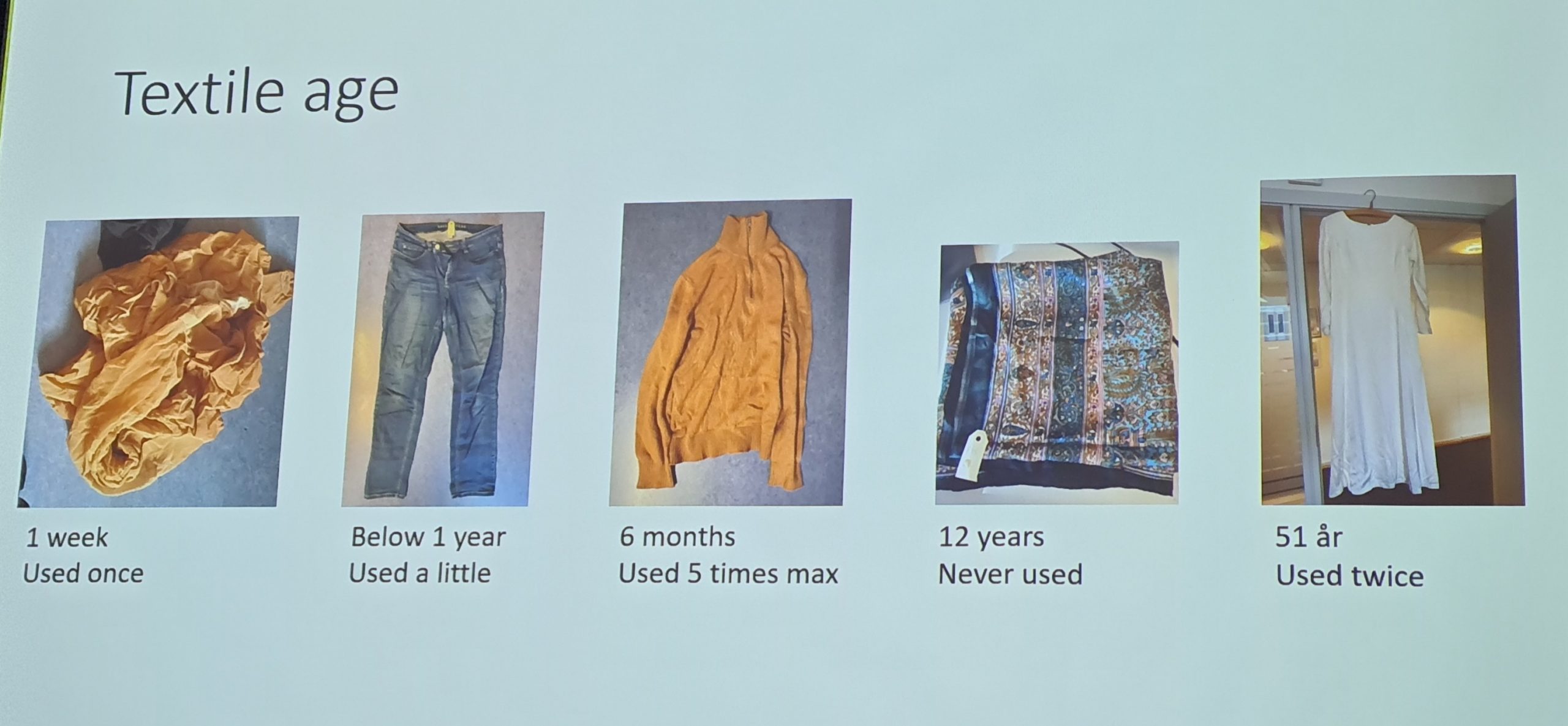
Author: Anna Schytte Sigaard Summary This project note presents preliminary findings from a PhD project looking into textile waste from Norwegian households. 28 households collected textiles that they would have otherwise discarded for a period… Want Not, Waste Not: Preliminary findings

Ingun Grimstad Klepp and Tone Skårdal Tobiasson What on earth is the functional unit of a winter coat, t-shirt, a warm sweater… or a pair of boots? For LCA-based tools and category rules, there is… A functioning ‘functional unit’?
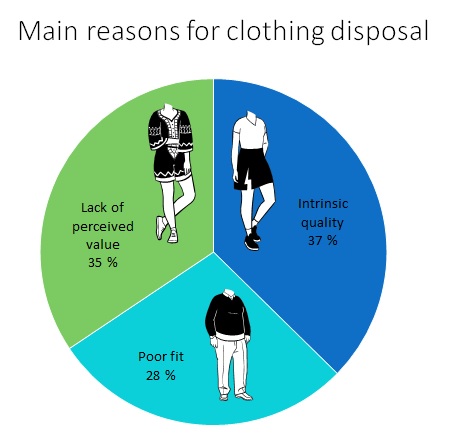
Authors: Kirsi Laitala and Ingun Grimstad Klepp, SIFO Abstract Garment lifetimes and longer serviceable life play important roles in discussions about the sustainability of clothing consumption. A compilation of the research on clothing disposal motivations… Review of clothing disposal reasons

Authors: Vilde Haugrønning, Ingun Grimstad Klepp and Anna Schytte Sigaard Norway leads the way in methods for studying the use of clothing. This is knowledge that is important in sustainability studies of apparel. How many… Deep diving into wardrobes provides important knowledge on clothes and their environmental impact

Increasing the length of clothing lifespans is crucial for reducing the total environmental impacts. This article discusses which factors contribute to the length of garment lifespans by studying how long garments are used, how many times they are worn, and by how many users. The analysis is based on quantitative wardrobe survey data from China, Germany, Japan, the UK, and the USA. Variables were divided into four blocks related respectively to the garment, user, garment use, and clothing practices, and used in two hierarchical multiple regressions and two binary logistic regressions.
The models explain between 11% and 43% of the variation in clothing lifespans. The garment use block was most indicative for the number of wears, while garment related properties contribute most to variation in the number of users. For lifespans measured in years, all four aspects were almost equally important. Some aspects that affect the lifespans of clothing cannot be easily changed (e.g., the consumer’s income, nationality, and age) but they can be used to identify where different measures can have the largest benefits. Several of the other conditions that affect lifespans can be changed (e.g., garment price and attitudes towards fashion) through quality management, marketing strategies, information, and improved consumer policies.
This article was developed from the project ‘Valuing Norwegian Wool’ initiated by the Norwegian National Institute for Consumer Research to generate knowledge on how wool can contribute to sustainable textile consumption, and how value creation can be increased in the Norwegian wool industry. The article will compare consumer perceptions, attitudes, practices and knowledge concerning wool as a material and as garments in Norway and in the United Kingdom, through a case study of wardrobes owned by six middle-class families.
The aim is to generate knowledge about the diverse web of aspects that influence consumption of woollen garments. The wardrobe study as a method aims to include the materiality of garments in clothes research in a more direct way. Analysing the materiality in connection with the social and cultural aspects of clothes gives us a better understanding of the relations between materiality and practice.
The material is not just ‘a carrier of different types of symbols, but an active element in the practices. Bringing this to the fore requires new research methods. This article discusses a methodological approach, we call it a wardrobe study, which allows for the analysis of the way in which clothes relate to each other on the whole or within parts of the wardrobe. More specifically, we discuss how this method can contribute to increasing the materiality of clothes studies. The theoretical point of departure for this approach is a practice theory in which the material enters as an integral part. First, the article briefly discusses developments within the study of dress and fashion. Second, the methods combined and developed in wardrobe studies are discussed. The emphasis here is primarily not only on the weaknesses of the individual methods in practice-oriented dress studies, but also on how they jointly can contribute to the wardrobe study.
Wool has been called the white gold and has warmed and brought joy to the Norwegian population throughout history. It is also a textile fibre with many unused features. The starting point of the project Valuing Norwegian Wool is a desire to help Norwegian agriculture, wool based industry, and design to exploit the potential inherent in Norwegian wool as raw material, and in the Norwegian textile tradition. Norway has a thriving textile industry and several strong companies that produce products made of wool. The marketing of the origin of the raw material these products are produced from is however rather inadequate and sometimes misleading. While fewer and fewer of the products are made of Norwegian wool, consumers – not without reason – take it for granted that Norwegian producers use Norwegian wool.
The project is funded by the Norwegian Research Council and led by SIFO. The project partners include representatives from the entire value chain – from agricultural organizations, industry and commerce, and design and consumption. This report is one of many publications in the project and makes visible the challenges that exist in the value chain, but also the great potential that is there.